Showing posts with label Cursor. Show all posts

Sunday, August 23, 2026

Obsidian MCP — engineering memory that stays Markdown

Assistant memory should be files you can open. obsidian-mcp (0.1.0) is a local MCP server that gives Cursor and GitHub Copilot persistent engineering memory — stored as ordinary Markdown in an Obsidian vault. Obsidian does not need to be running. There is no community plugin and no hosted memory API.

The vault is the source of truth. Notes stay readable in Obsidian, git, or any text editor. The same stdio process works for both Cursor (.cursor/mcp.json) and Copilot / VS Code (.vscode/mcp.json).

The loop

Cursor / Copilot
        │  MCP stdio
        ▼
obsidian-dev-memory
        │
        ▼
Obsidian Markdown vault
  AI Memory/Projects/<slug>/
    Project State.md
    Sessions/YYYY-MM-DD.md
    Decisions/YYYY-MM-DD-<slug>.md
  1. Before substantial work, the assistant calls get_project_context.
  2. After a real implementation, it calls capture_work_session.
  3. When an architecture choice lands, it calls record_decision.
  4. When overall status changes, it calls update_project_state.

Typo fixes and one-line mechanical edits are not memory. The Cursor rule and Copilot instructions say so explicitly, so the vault does not fill with noise.

The seven tools

Tool What it does
get_project_context Project State plus newest sessions and decisions. Empty sections if the project is new — never the whole vault.
capture_work_session Append a timestamped section to today’s session note. Optional Git snapshot: repo, branch, short SHA, dirty flag, short file list. No full diffs.
record_decision Write YYYY-MM-DD-<slug>.md. Collision adds -2, -3 — never overwrite.
update_project_state Replace the concise current-state note. Not a session log.
search_memory Local filename and text search over that project’s memory.
read_note One vault-relative Markdown file.
append_daily_note Append to Daily/YYYY-MM-DD.md. Never overwrite existing contents.

Safety is the product

This is not a general filesystem API. Every note path must resolve inside OBSIDIAN_VAULT_PATH. Absolute paths, ../ traversal, and detectable symlink escapes are rejected. Writes are atomic (tempfile + os.replace).

Secrets never land in the vault on purpose. Values that look like keys, tokens, JWTs, private keys, or password= assignments are replaced with [redacted-secret] before write. The assistant instructions also forbid persisting .env contents, database credentials, and customer data.

Wire it into a project

export OBSIDIAN_VAULT_PATH="$HOME/Documents/ObsidianVault"
uv sync
uv run python -m obsidian_dev_memory

./scripts/install-project.sh \
  --project /path/to/your-app \
  --vault "$OBSIDIAN_VAULT_PATH"

The installer merges MCP JSON (it does not wipe unrelated servers) and drops the Cursor rule plus Copilot instructions so both assistants use the same memory habits. Point OBSIDIAN_VAULT_PATH at a real vault directory; the server does not auto-load .env files.

0.1.0 is the first cut that is worth installing: seven tools, vault confinement, Git context on sessions, and an installer that does not destroy existing MCP config. Next work is whatever the vault teaches us we forgot to remember.

Source: github.com/jmjava/obsidian-mcp

Friday, July 17, 2026

Introducing SDLC-SPDD — disciplined AI delivery, and what we shipped

AI coding assistants are fast. Delivery still needs a spine. Without one, sessions drift, Work IDs get lost, and “what should we do next?” becomes a new chat every morning.

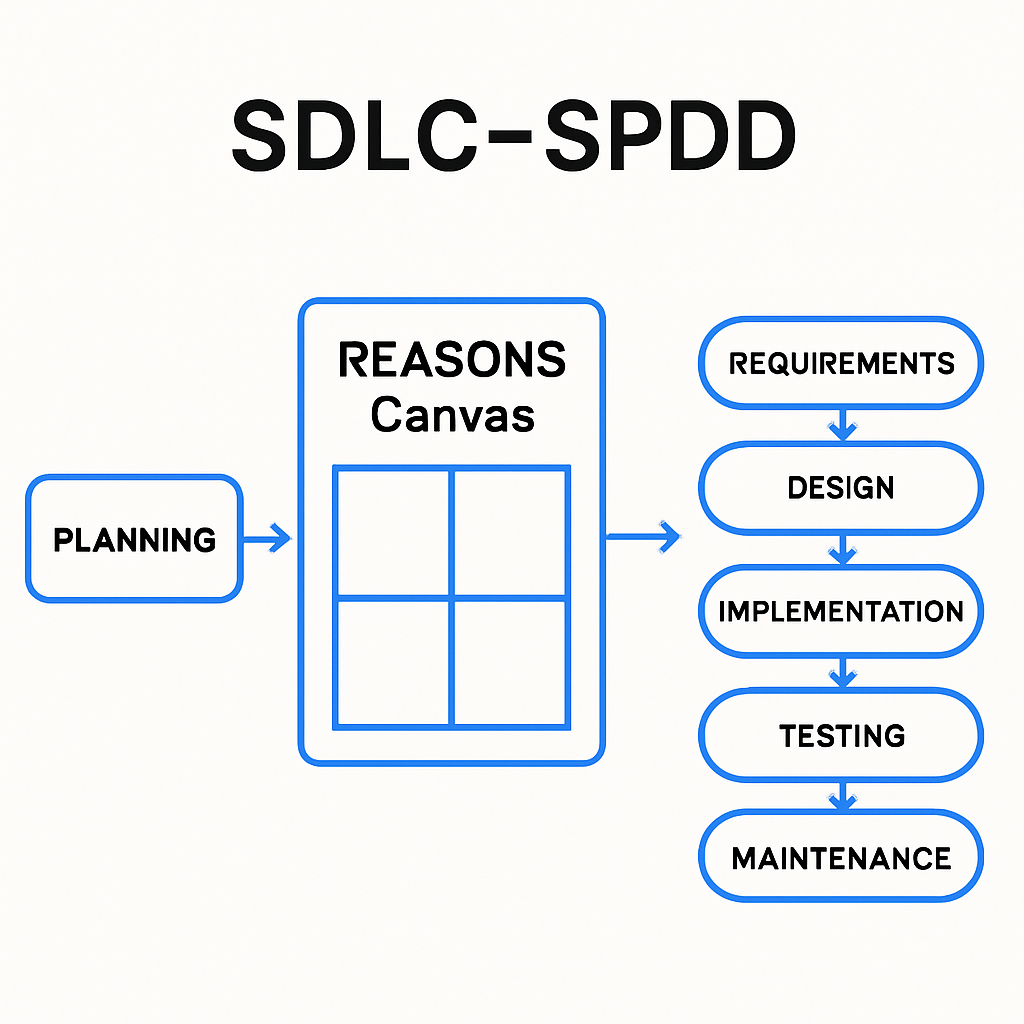
SDLC-SPDD Orchestrator is a multi-assistant scaffold for disciplined AI-assisted delivery. It installs into your project and gives Cursor, Copilot, and Claude Code the same operating model: plan why the work matters, design what to build (and what not to), then run phases with clean handoffs.

SDLC-SPDD three parts: Planning, REASONS canvas, SDLC phases
Three parts that work together: Planning, SPDD (REASONS canvas), and SDLC lifecycle.

The idea in one minute

The framework is built from three parts:

Part Answers Artifacts
Planning Why the work matters ROADMAP.md, milestones, requirements, session notes
SPDD What to build (and what not to) REASONS canvas under spdd/canvas/
SDLC Who acts when and how sessions hand off phase commands, session briefs, agent-context/ memory

Commands come in two flavors: assistant slash commands in chat (/sdlc-spdd-plan, /sdlc-spdd-code, …) and a shell workflow CLI for day-to-day orientation (./scripts/sdlc.sh next). Install once from the orchestrator repo; then work inside your target project.

We develop the framework the same way we ask adopters to work: Work IDs, canvases, and milestones — dogfooding on the orchestrator itself. Progress follows Kent Beck’s ladder: make it work → make it right → make it fast.

What we shipped recently

The biggest recent theme is agent coordination — so humans and assistants stay on the same Work ID and the same next step.

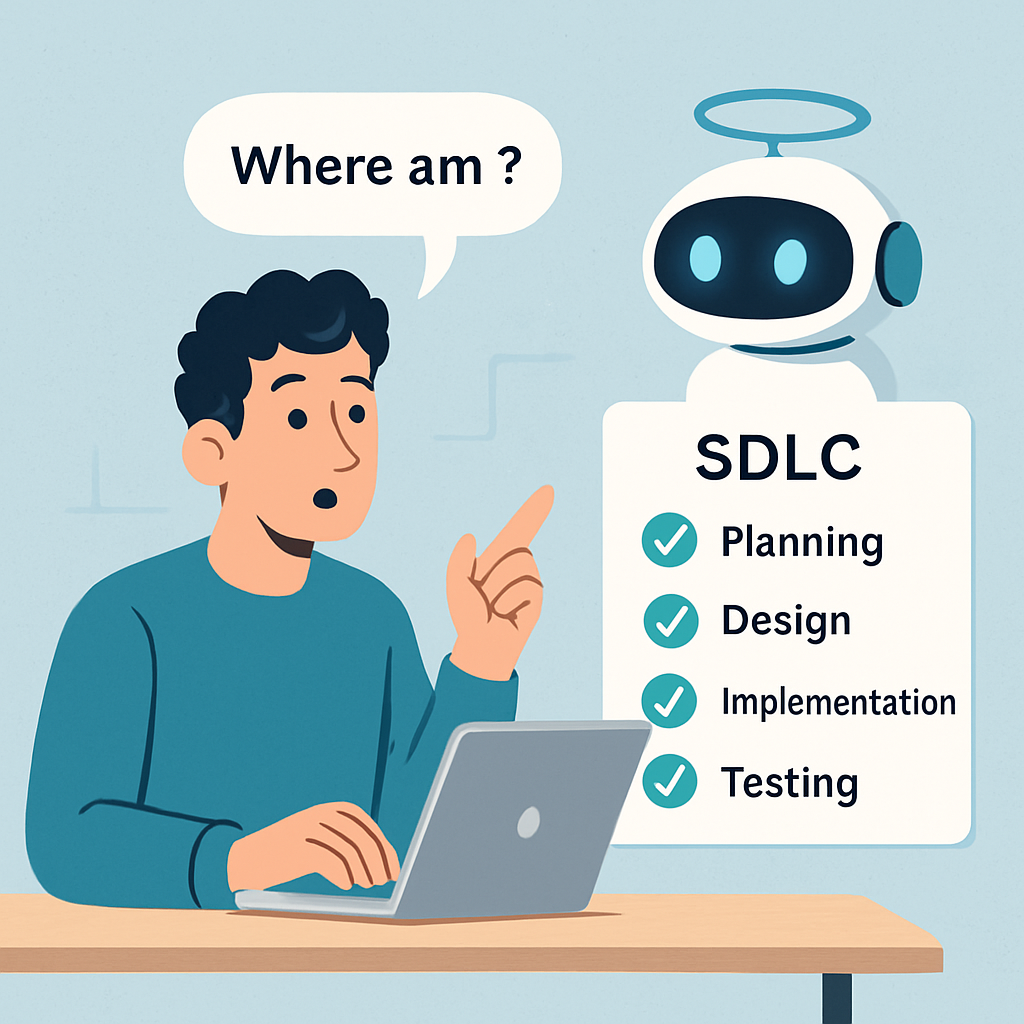
Where am I workflow orientation for AI assistants
Orientation beats vibes: the same “what now?” answer in the shell and in chat.

1. SDLC pointer + workflow CLI

A persistent Work ID on your machine (.sdlc/pointer) and guarded wrappers that refuse commands aimed at the wrong chore. The workflow CLI tracks phase and gates, infers the next canvas operation, and captures sessions safely:

./scripts/sdlc.sh next
./scripts/sdlc.sh advance
./scripts/sdlc.sh shelf
./scripts/sdlc.sh resume

Shipped via #20 and #21 (tracking #19).

2. /sdlc-spdd-whereami (and friends)

In Cursor, Copilot, and Claude you can ask /sdlc-spdd-whereami and get the same orientation as sdlc.sh next. Workflow chat wrappers also cover claim, shelf, advance, next, and team — so you do not have to leave the assistant to stay in sync.

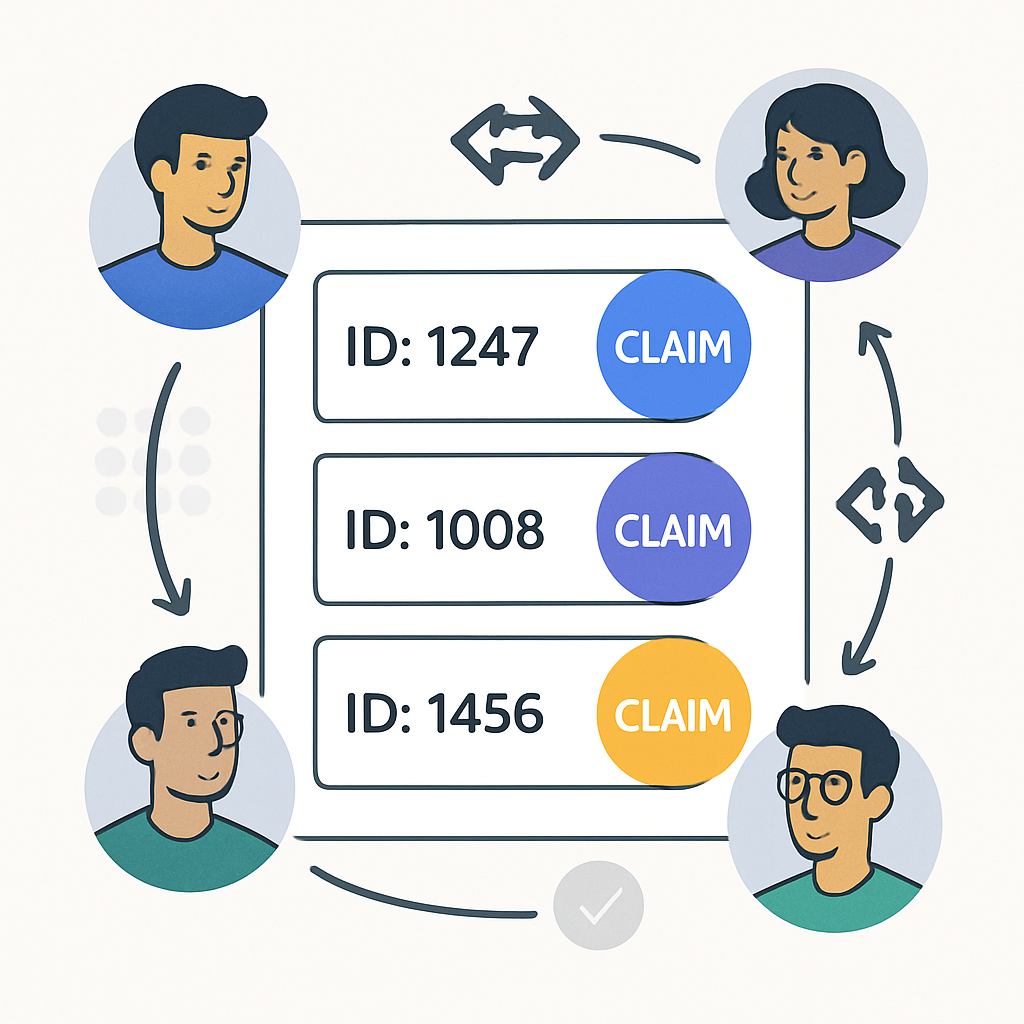
Team work-ID registry and claims synced through git
Team claims live in git so ownership is visible across machines.

3. Team Work ID registry

Shared claims in agent-context/work-registry.tsv sync through git. Teammates can see who owns which Work ID, with stale TTL and notes for branch / PR / Jira:

./scripts/sdlc.sh claim FEAT-005
./scripts/sdlc.sh team
./scripts/sdlc.sh release FEAT-005

Pointer and workflow state stay local; team claims are the shared layer.

4. Milestone 1 — make it right (and measure make it fast)

On the make-it-right track we completed the structural cleanup adopters feel every day:

  • Shared script library — less duplicated shell logic across install/workflow scripts
  • Command-spec generation — adapters stay aligned across Cursor / Copilot / Claude
  • Extension hook manifest — clearer places for project-specific overrides
  • Analysis Scope Lock/sdlc-spdd-analysis locks IN / NOT scope before generation
  • Jira-compatible requirements — YAML frontmatter + validation for milestone docs
  • Milestone subdirectory layout — cleaner requirements/milestones/ structure
  • Session-brief archive — rotation so session folders do not grow forever

For make-it-fast measurement, we landed a prompt-optimization ledger and canvas readiness indicators — so coding gates on “Ready For Coding” instead of hope. Remaining make-it-fast spikes (Guide RAG context backend, local models) stay experimental until Guide MCP is ready.

Try it

  1. Clone jmjava/sdlc-spdd-orchestrator
  2. Install into a target project with ./scripts/setup-agent-prompts.sh (see the README adoption path)
  3. In chat: /sdlc-spdd-whereami — or in the shell: ./scripts/sdlc-spdd/sdlc.sh next
  4. Optional: watch the short narrated demos on GitHub Pages

If you are already deep in AI-assisted coding and want fewer lost threads between sessions, start with the first-day walkthrough in the repo docs — then claim a real Work ID and let the canvas carry the contract.

— John · github.com/jmjava/sdlc-spdd-orchestrator